Today (July 26), the torch relay for The World Games 2025 Chengdu (“TWG 2025 Chengdu”) officially commenced. This marks the first torch relay in the history of The World Games. The route begins at Sanxingdui, the beacon of ancient Sichuan, and continues to the spectacular Jinsha Site. From there, it takes us to the ecological haven of the Panda Base, the rich history of Three Kingdoms at Wuhou Shrine, before highlighting the charm of Su Shi at Sansu Shrine. The relay ultimately concludes at Xinglong Lake, which captures the lively essence of Chengdu as a park city. With six iconic sites and 120 torchbearers, the relay weaves together Chengdu’s evolution from ancient civilization to a modern landscape.

Footage featuring Xin Ning’s torch relay moments
At the Chengdu Research Base of Giant Panda Breeding, Ong Xin Ning, a class 2023 student majoring in Radio and Television Scriptwriting and Directing from Malaysia, had the honor of being the 44th torchbearer. She received the torch, a symbol of peace and friendship, from Zhao Hailing, a national leader in rural youth development, and subsequently passed it to Tang Guoliang, a provincial representative inheritor of Northern Sichuan Puppet Opera. In a mere few dozen meters, the relay created a bridge across various narratives of rural revitalization, intangible cultural heritage, and international youth engagement.
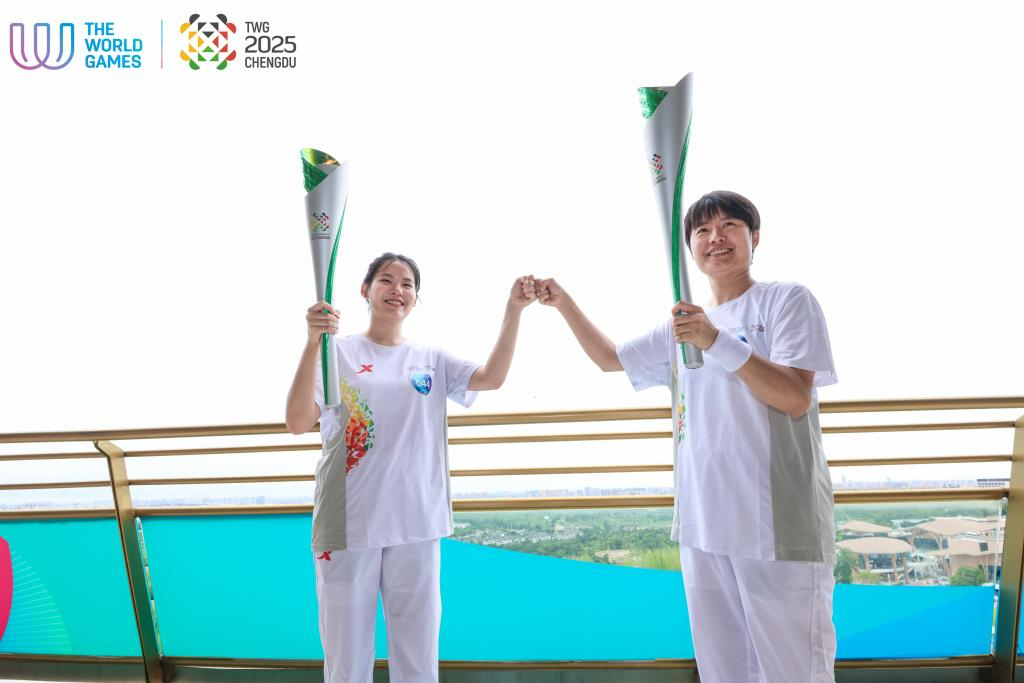
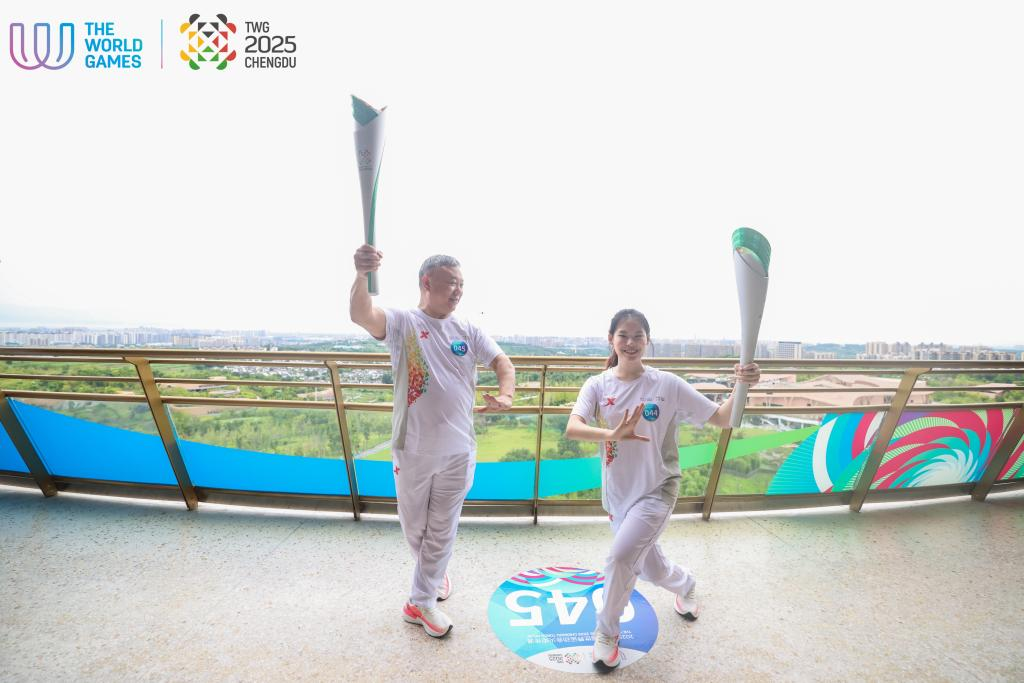
“Individuals from diverse backgrounds, including scientists, athletes, ride-hailing drivers, and even Jackie Chan, who is familiar to Malaysian, are coming together to pass the torch. As a Malaysian student, I feel extremely privileged to be part of this meaningful event!” After her torch relay experience, Xin Ning expressed her thoughts on an "Open China" to reporters: “Here, everyone can be a participant in the grand event.”
Relay the “Chengdu FISU Games” baton and run for dreams
In July 2023, Chengdu hosted the 2021 FISU World University Games (“Chengdu FISU Games”). When the torch relay reached its final destination at the Games’ main stadium in Dong’an Lake Sports Park, our Laotian student Nounbaikham Moukpalakham proudly served as the 109th torchbearer. Footage of her torch relay moments was repeatedly featured on the university’s large screen and WeChat official account. Upon enrolling at university, Xin Ning dreamed of one day holding the torch and passing it on herself.
TWG 2025 Chengdu not only represents the first time this prestigious event has been held in Chinese Mainland, but it is also significant as the second international comprehensive sports event hosted in western China after Chengdu FISU Games.
When Xin Ning learned about the recruitment of torchbearers for TWG 2025 Chengdu, she eagerly submitted her application. During the waiting period, she doubted her own capabilities and felt her chances of being selected were slim. However, a call from an unknown number brought her unexpected joy that afternoon: “Xin Ning, congratulations on becoming a torchbearer for The World Games 2025 Chengdu.”
She initially wanted to share the delightful news with her family and friends immediately but ultimately decided against it, deleting the message she had drafted. Instead, she planned to remind them to watch the live broadcast of the torch relay that day: “I want to give them a big surprise!”
As a university student torchbearer, Xin Ning recognized the weight of her responsibility.
She rose early every morning for a month, engaging in aerobic workouts on an empty stomach and undertaking strength training in the evening, all to ensure she was in peak condition for the Games. “I believe that torchbearers do more than just carry the torch; we embody the spirit of sportsmanship, promoting harmony in diversity as reflected in the Chengdu World Games slogan, ‘Boundless Sports, Countless Wonders.’”
Beginning her martial arts journey at age 15, Xin Ning notes that martial arts, which debuted as an invitational event at The World Games 2009, Kaohsiung, will be featured as an official competition at TWG 2025 Chengdu for the first time. The sports consist of two categories—Sanda and Taolu. Ong’s younger sister is also training in Taolu, aspiring to join the Malaysian national team. “We are both eagerly awaiting the martial arts events at TWG 2205 Chengdu.”

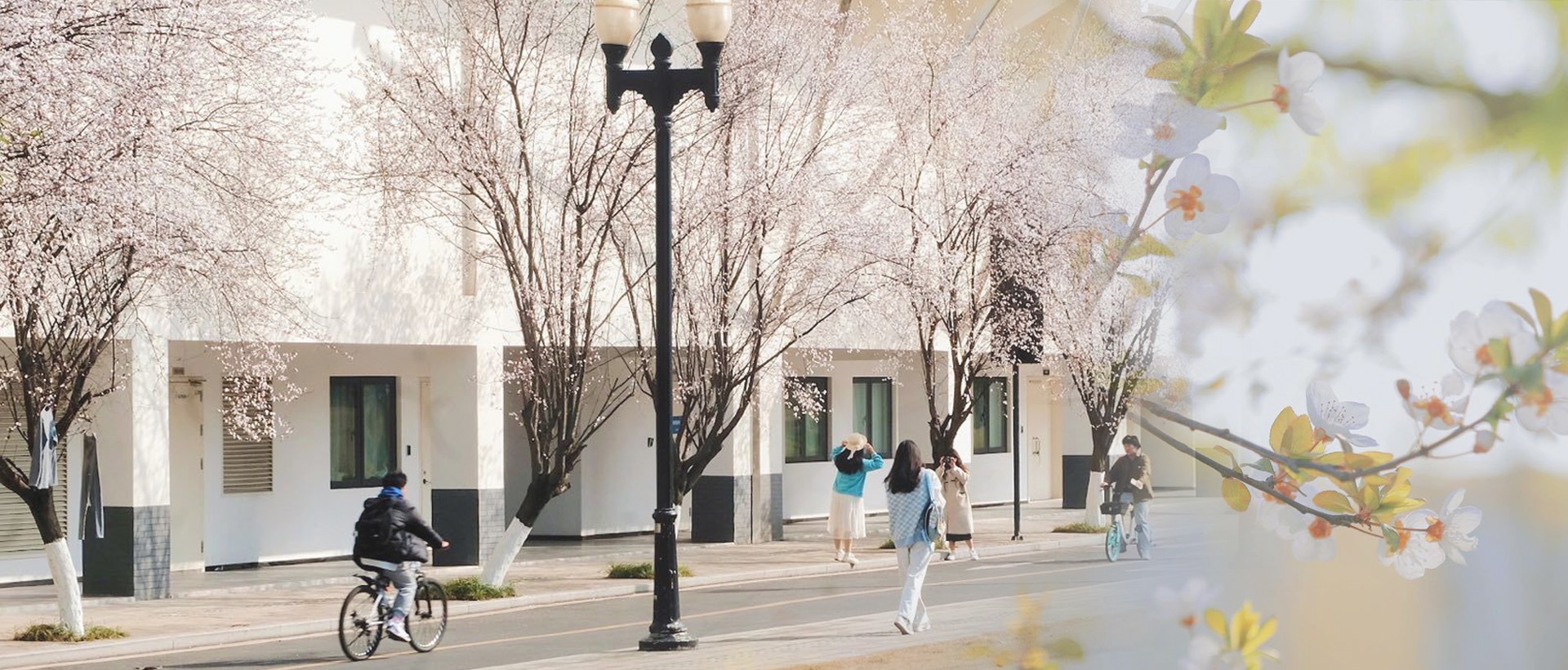
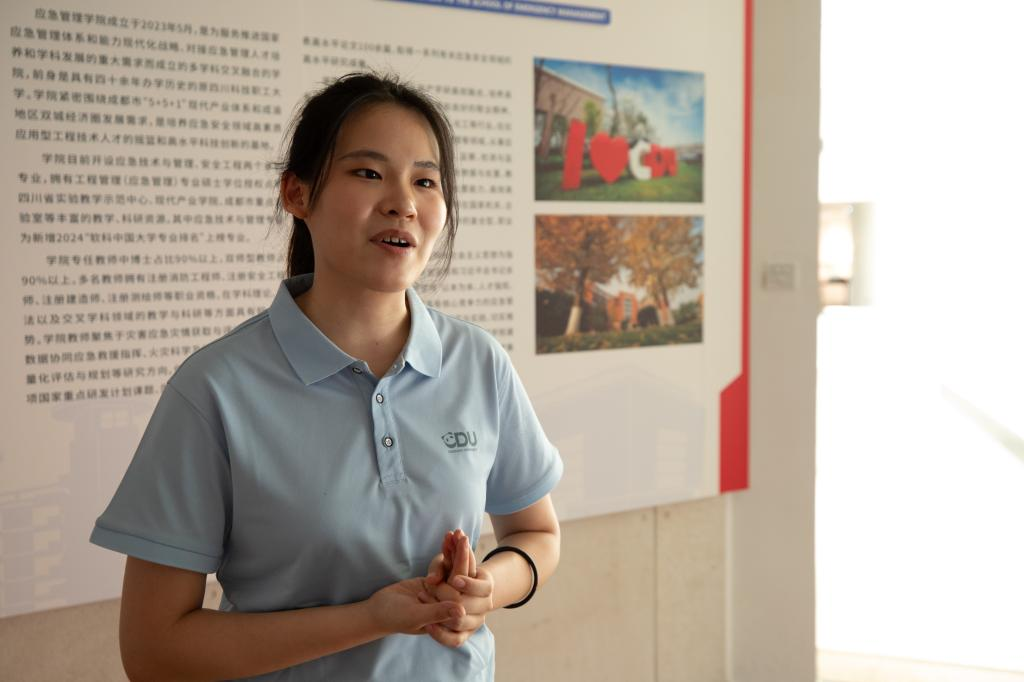
CDU, my second “home”
“At CDU, I felt the warmth of ‘home.’”
During high school, Xin Ning developed a keen interest in video shooting and editing and began creating works for the school media. After graduation, through a referral from an organization, she discovered the Radio and Television Scriptwriting and Directing major at Chengdu University, known for its strong reputation, beautiful campus, and welcoming policies for international students. “My parents fully supported my decision to study in China, hoping I could broaden my horizons and gain rich experiences.” After careful consideration with her family, she submitted her application to Chengdu University.
In September, Ong arrived her desired destination.
Traveling over 3,000 kilometers from Malaysia to the unfamiliar city of Chengdu initially made Xin Ning anxious. However, the reassuring words from her homeroom teacher, Feng Yubing, soothed her worries: “I hope you can see me as your family here in China. If you face any difficulties, feel free to talk to me.” Whenever immigration issues arose, Ms. Feng was patient and supportive. She also consistently encouraged students to participate in competitions. It was through Ms. Feng’s guidance that Xin Ning found the courage to apply to be a torchbearer. “I used to hesitate and fear making mistakes. Without her, I might have missed stepping out of my comfort zone.”
Xin Ning became part of the International Student Assistant Team during her freshman year, organizing significant events for the International Department of the College of Chinese & ASEAN Arts and assisting international guests visiting the school. In 2023, as part of the International Art and Culture Exchange Festival, Xin Ning and her friends began preparing ingredients and cooking the Malaysian specialty dish nasi lemak at 6:30 in the morning. “The nasi lemak received rave reviews from my Chinese classmates, which made me very happy,” she remarked.
Adapting to Chengdu’s culinary flavors was not a challenge for Xin Ning. She quickly grew fond of the “intensely numbing and spicy” taste of Sichuan cuisine. “The food here is so delicious! Spicy chicken, skewers, hotpot...” During her first year abroad, she gained ten pounds. “But even now, I can only manage mildly spicy hotpot.”
However, mastering the Sichuan dialect posed a significant challenge for her integration into local life. As a fourth-generation Chinese Malaysian, Xin Ning is often mistaken for a local by cafeteria staff who instinctively speak to her in Sichuan dialect. When the pace of their speech quickens, she sometimes struggles to comprehend. Throughout her two years at CDU, frequent communications in the dialect with teachers and classmates led her to uncover its charm. She made an effort to learn pronunciation and common expressions, gradually acquiring the ability to speak some Sichuan dialect herself. While relishing delicious food, Xin Ning enthusiastically exclaims, “Bashi de hen!” (meaning “Very tasty!” in Sichuan dialect).

Xin Ning’s video work “Foreigners Encounter Qingshen Bamboo Weaving”
It’s a camera and also a “torch.”
Influenced by traditional Chinese culture from a young age, Xin Ning shares her experiences as an international student in China through short videos, leveraging her professional skills to promote intangible cultural heritage.
The projects she contributed to, including “Young Silk Road Youth in Chengdu” and “‘Foreigners’ Encounter with Qingshen Bamboo Weaving,” gained traction across multiple platforms and earned several accolades: the Excellence Award at the 4th ASEAN-China “Friendship and Cooperation” Short Video Contest, the National Excellence Award for "My Beautiful Encounter with China,” and the Second Prize at the Panda Reporter Short Video Competition.
“Their commitment to craftsmanship and pursuit of excellence profoundly moved me.” While filming the Qingshen bamboo weaving experience, Xin Ning marveled at the artisans’ diligence. The inheritors, the Yin father and daughter duo, alongside Master Liu, who was responsible for constructing the dragon’s body framework, took on the ambitious project of creating a 99-meter-long woven bamboo Chinese dragon, previously having set a Guinness World Record with a dragon exceeding 80 meters.
The meticulous process of selecting, sawing, splitting, arranging, cutting, and bending bamboos demands immense patience from each artisan involved. Xin Ning expressed, “I hope that more individuals will learn about and cherish China’s intangible cultural heritage, allowing outstanding traditional culture to thrive and resonate across generations.”
On July 17, the mutual visa exemption agreement between China and Malaysia officially took effect, permitting citizens of both countries up to 30 days of visa-free travel. Xin Ning was overjoyed by this development: “This signifies an even closer relationship between China and Malaysia.”
She expressed her desire for Malaysians to visit Chengdu to attend TWG events, experience the leisurely atmosphere in places like Kuanzhai Alley and Yulin Road, and enjoy an “immersive” understanding of Sichuan opera face-changing and other rich traditional Chinese cultures. “A note to remember is not to discard your TWG 2025 Chengdu tickets. There’s a trend in China called ‘ticket stub economy’—your ticket can offer discounts at many restaurants and attractions.”
Following her role as a torchbearer, Xin Ning intends to stay involved in volunteer efforts. She remarked, “I look forward to using my camera as a torch, conveying friendliness and enthusiasm while serving guests from around the globe and sharing the flame of China’s stories with the world.”
(Some content sourced from China News Service)
Editor: Min Xiuling Executive Editor: Lyu Jia