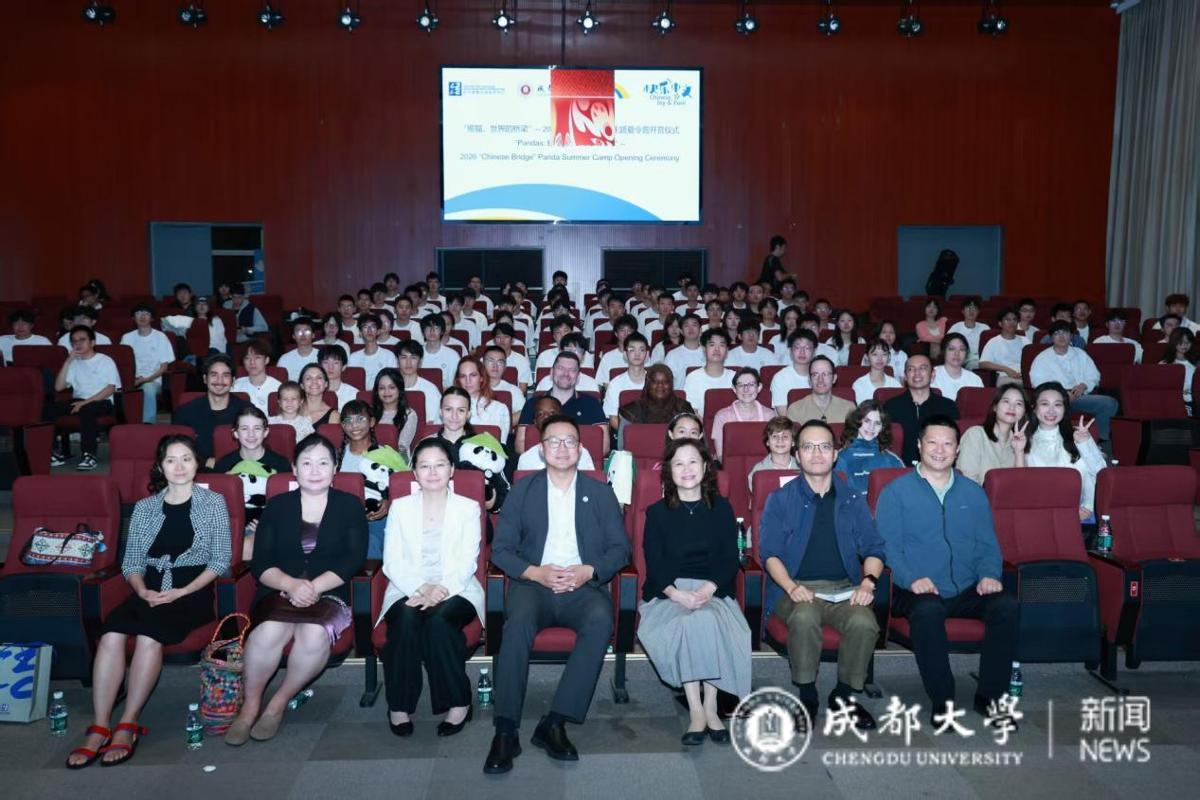
On the morning of September 14, the 2026 “Chinese Bridge” panda-themed Summer Camp, under the theme “Pandas: A Bridge to the World,” opened at Chengdu University. Hosted by the Center for Language Education and Cooperation (CLEC) of China’s Ministry of Education and organized by Chengdu University, the summer camp is designed for international primary school students and their parents in parent-child groups.
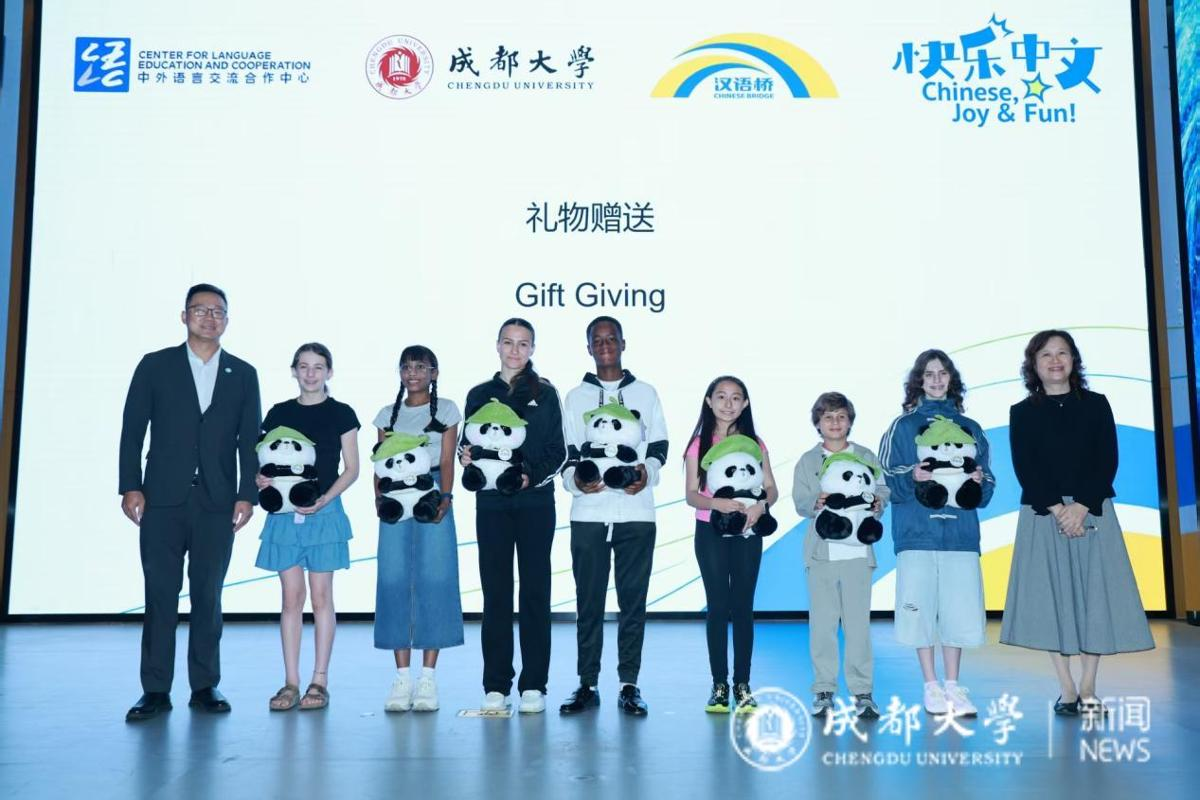
Qu Songming, Deputy Director of the Exchange Division at CLEC, and Peng Xiaolin, Vice President of Chengdu University, attended the opening ceremony. Also present were seven young participants—from Malaysia, Ghana, the United States, New Zealand, Croatia, Mexico, and Costa Rica—along with their parents, accompanying teachers, and camp volunteers.
In his address, Qu Songming extended heartfelt thanks to Chengdu University for its meticulous organization. He stated that Chengdu is a city that combines profound historical heritage with an open and inclusive character, and that Chengdu University has a solid foundation and rich experience in international Chinese language education and study-in-China programs, providing strong support for the successful hosting of this summer camp. The “Chinese Bridge” Summer Camp, he said, serves as an important platform for youth exchanges and mutual understanding between China and other countries, and has played a distinctive role in fostering cultural exchange and stronger people-to-people ties. Themed “Pandas: A Bridge to the World,” this year’s program draws on Chengdu’s rich cultural heritage and its role as an international hub for opening-up and exchanges in western China. Designed for family groups of international primary-school pupils and their parents, the program blends Chinese-language learning, cultural immersion and parent-child learning. Organizers encouraged campers to cherish the opportunity, speak Chinese with confidence, and experience Chinese culture firsthand, so that when they return home they can share what they saw and learned with more friends and family — and become young ambassadors for friendship and mutual understanding between China and the world
Peng Xiaolin said young people are among the most active participants in dialogue among civilizations, while parent-child learning is one of the warmest ways to bridge cultural divides. Chengdu University, an important application-oriented city university in western China, has extensive experience and a strong track record in international engagement, cultural communication and international cooperation. For this year’s summer camp, the university has designed core modules on panda ecological conservation, exploration of ancient Shu civilization, and hands-on experiences of intangible cultural heritage. She expressed the hope that students and parents would experience the charm of the Chinese language and Tianfu culture through immersive activities, form friendships across borders with language as the bond and pandas as the bridge, and become messengers of peace and friendship.
Benjamin and Ailinxing, winners of the Best Stage Presence Award at the 5th “Chinese Bridge” Chinese Show for Foreign Primary School Students, and Solovey Eve Talia, champion of the competition's Americas region, spoke on behalf of the contestants. They shared what first inspired them to learn Chinese and the joy it has brought them, saying they looked forward to exploring Chengdu’s streets and alleys during the camp, getting up close to the charm of giant pandas, experiencing the exquisite artistry of intangible cultural heritage, and making like-minded friends from around the world.
During the ten-day program, campers will participate in immersive Chinese language learning and cultural experiences in Chengdu and Tianjin. They will also attend the finals and award ceremonies of the 19th “Chinese Bridge” Chinese Proficiency Competition for Foreign Secondary School Students and the 6th "Chinese Bridge" Chinese Show for Foreign Primary School Students. With pandas serving as a bridge, the program aims to deepen mutual learning between Chinese and foreign civilizations, foster people-to-people ties, and provide young people from around the world with a platform to gain a firsthand, multi-dimensional and panoramic view of China.
Editor: Min Xiuling Executive Editor: Lyu Jia