The 2026 Songkran Festival Cultural Exchange Event of Chengdu University was held on campus on the afternoon of April 14. As part of the international communication and youth exchange program themed on "Youth Alliance: Most YOUNG Chengdu," the event utilized the Songkran Festival as a bridge to establish a cultural exchange platform for youth from China and abroad. It aims to deepen people-to-people ties between China and Southeast Asian countries, showcasing Chengdu's open and inclusive character and Chengdu University's international education feature, while serving as a celebration for the 5th anniversary of the China-ASEAN Comprehensive Strategic Partnership.
On the day of the event, leaders from the Chengdu People's Association for Friendship with International Countries, the Chengdu Education Center for International Exchanges, and Chengdu University, together with Acting Consul-General Najjsiri Nimyizhune of the Royal Thai Consulate-General in Chengdu and her delegation, Dean Kanit Kheovichai of the Faculty of Education at Silpakorn University and his team, and Vice President Peng Xiaolin of Chengdu University. They joined Chinese and international faculty and student representatives for this cross-border celebration.
Blessings through Sand Pagodas: Opening a New Chapter of Cultural Exchange
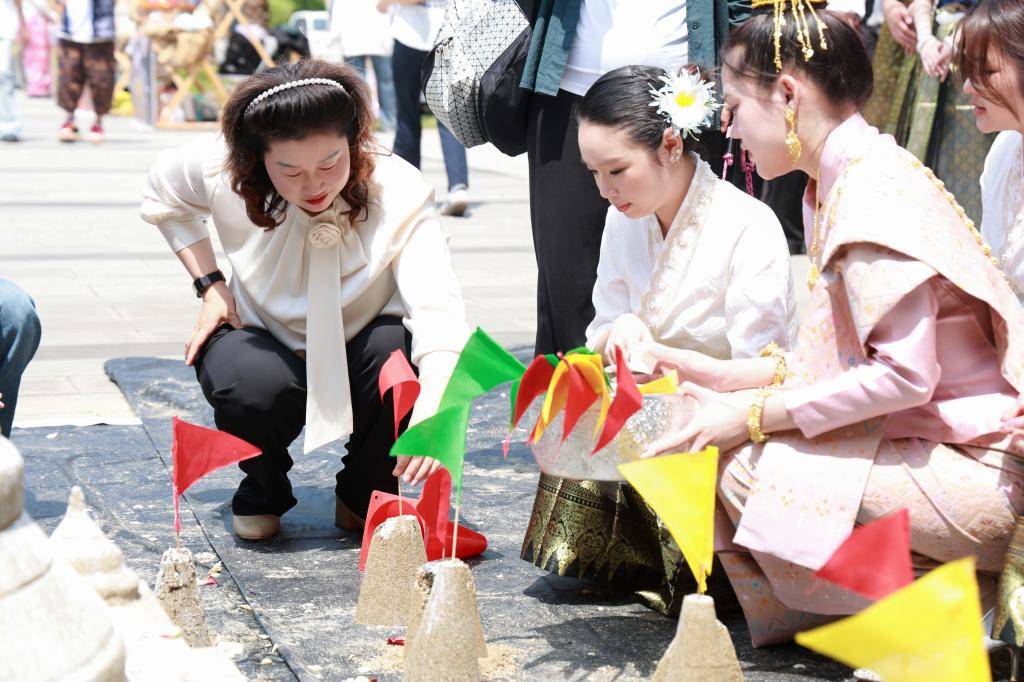
The event commenced with a unique sand pagoda-building ceremony. As a shared tradition among the peoples of Southeast Asian countries like Laos and Thailand, as well as ethnic minorities such as the Dai in China, building sand pagodas serves as a common medium for them to express their wishes for peace, prosperity, and well-being. Guests, faculty, and students joined in building sand pagodas and planting flags while making wishes, immersing themselves in the cross-border festive atmosphere and cultural resonance.
China and Thailand Joint Stage Showcase: Youthful Exchange and Civilizational Mutual Learning
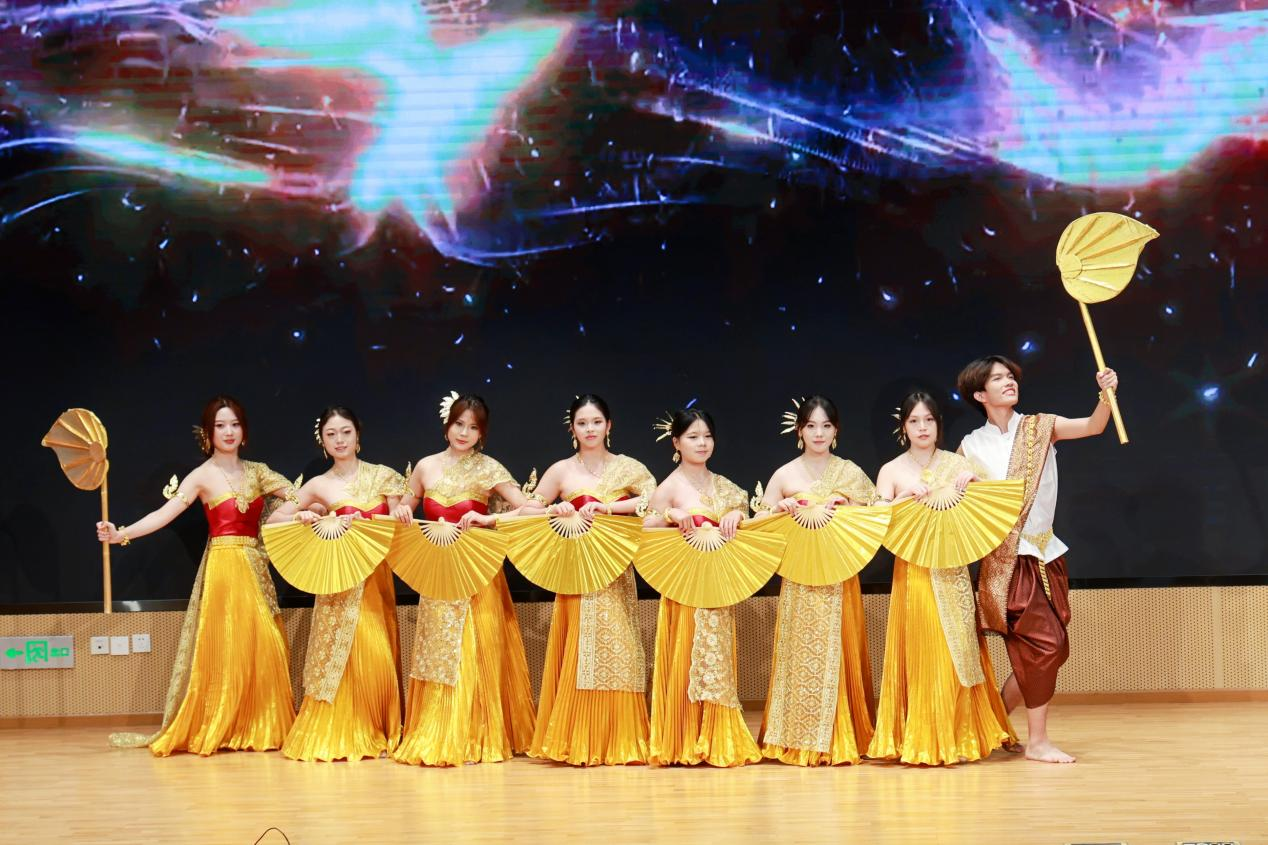
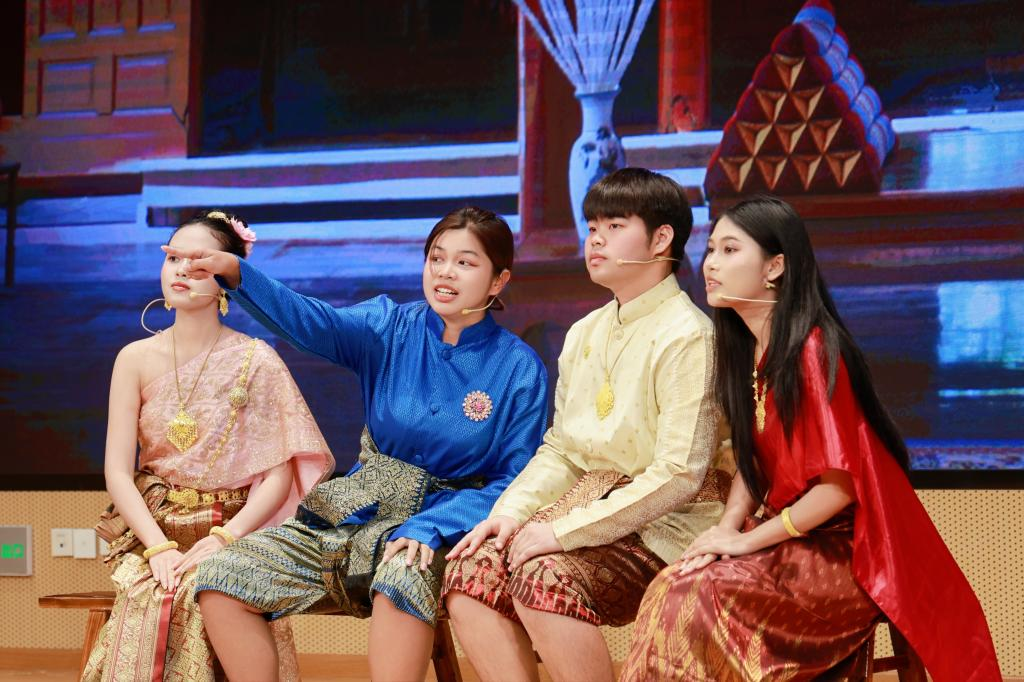
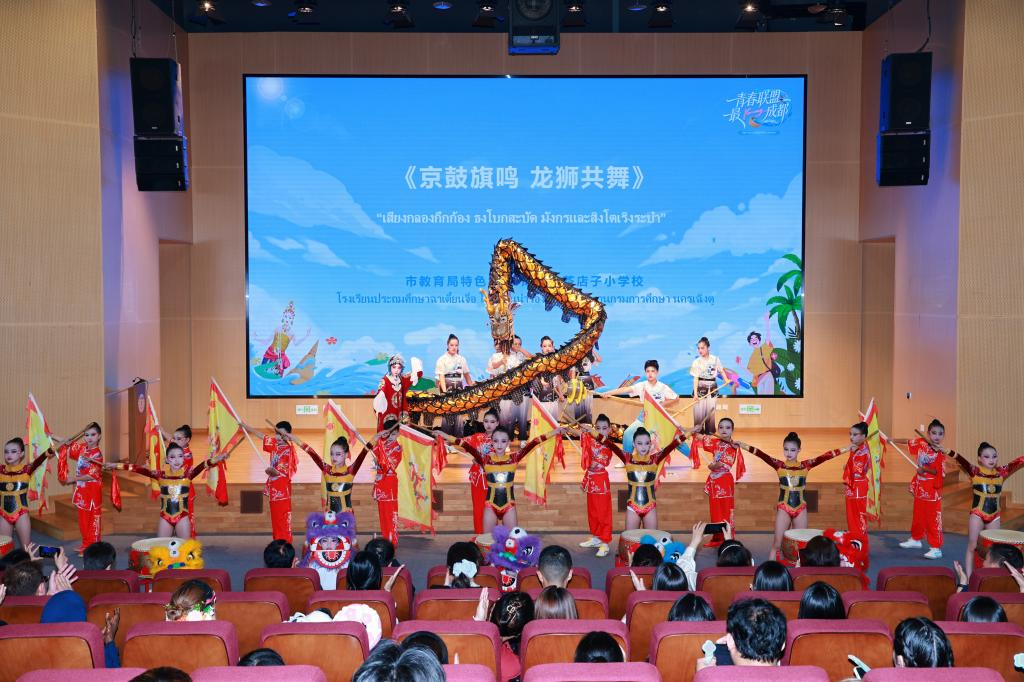
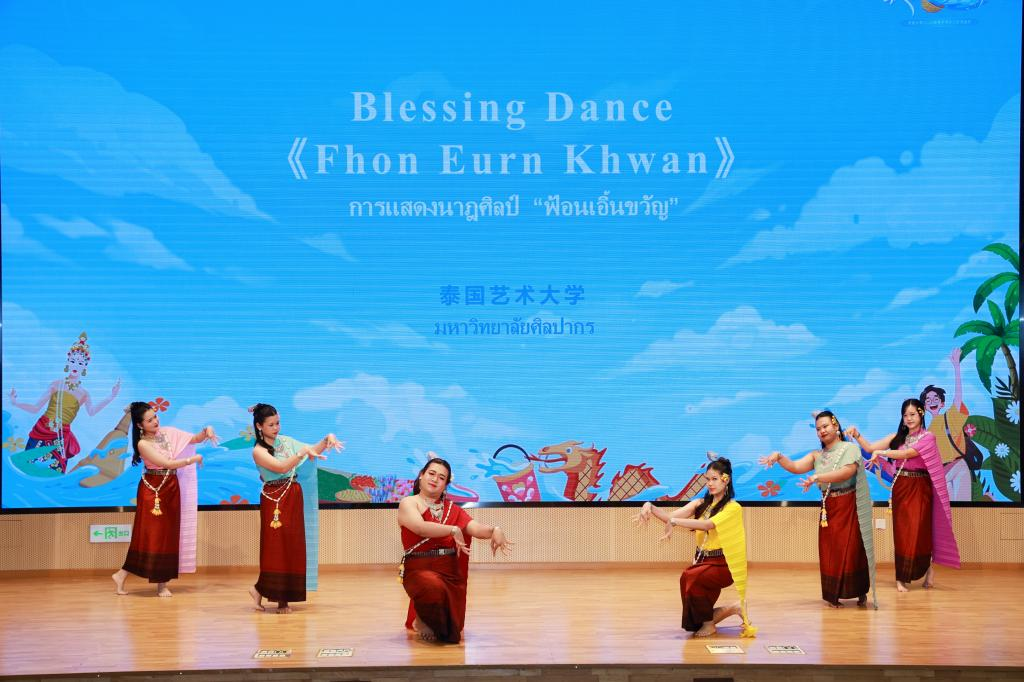
The opening ceremony, co-chaired by Chinese and Thai teachers and students, featured a spectacular array of artistic performances. Chinese students from the College of Foreign Languages and Cultures, dressed in traditional costumes, performed the Thai dance "Ancient Siamese Music: The Water‑Splashing New Year." Thai students from the International Department of the College of Chinese and ASEAN Arts performed the scene play "Mr. Nice Guy" in fluent Chinese, showcasing Thai cultural charm and a deep understanding of Chinese culture through their witty and lively performance. Chengdu Chadianzi Primary School presented "Resounding Drums and Banners, Dancing Dragons and Lions," embodying the grandeur and festivity of traditional Chinese culture. Teachers and students from Silpakorn University delivered an authentic blessing dance, "Fhon Eurn Khwan," whose graceful movements and profound resonance conveyed heartfelt wishes that transcend borders.
Conveying Warmth with Water, Fostering Mutual Understanding through Celebration
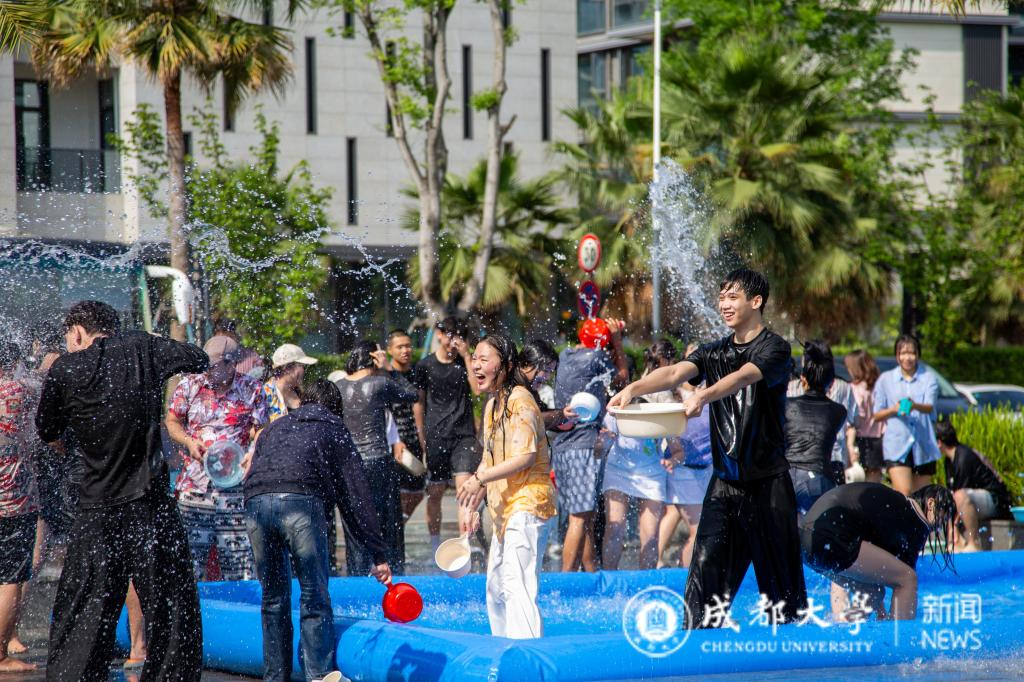
Following the opening ceremony, a Songkran water-blessing ritual took place outdoors. Guests joined Chinese and international students in sprinkling water to offer blessings, highlighting the traditional custom of "offering water as a token of goodwill." The water-splashing celebration marked the climax of the event. Amidst splashes of water and peals of laughter, Chinese and international teachers and students splashed water on each other to exchange blessings, further deepening their friendships and strengthening their bonds through these joyful interactions.
Outdoor flash mob performances sustained the excitement, featuring a long-drum parade and Lam Tat-themed shows by teachers and students from Silpakorn University. Thai and Lao students from the International Department of the College of Chinese and ASEAN Arts also presented distinctive songs and dances, showcasing a vibrant fusion of diverse cultures.
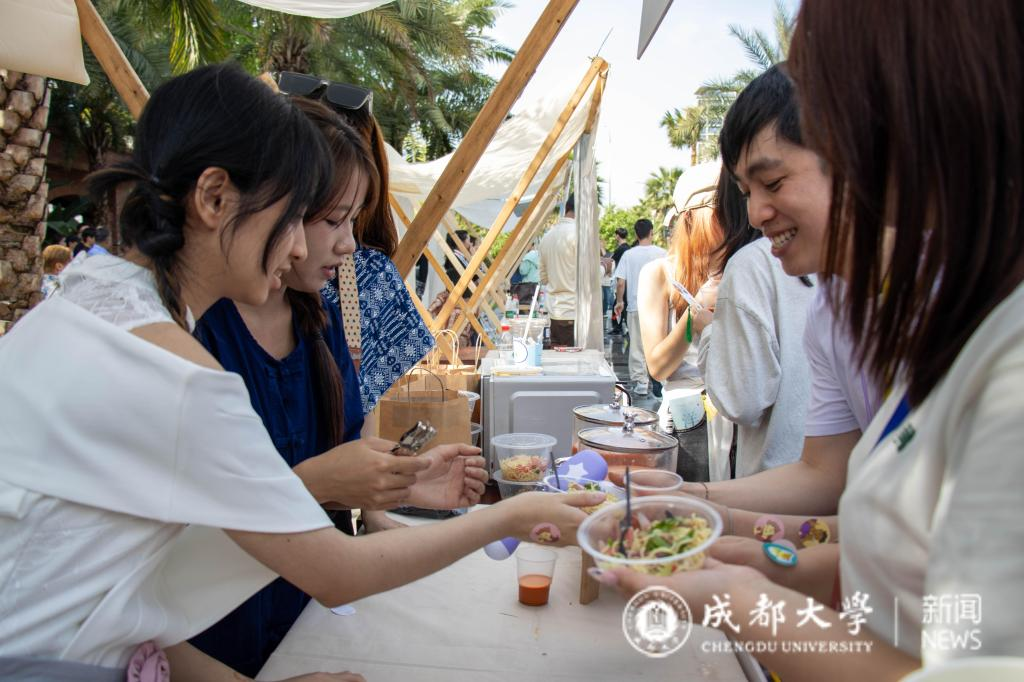
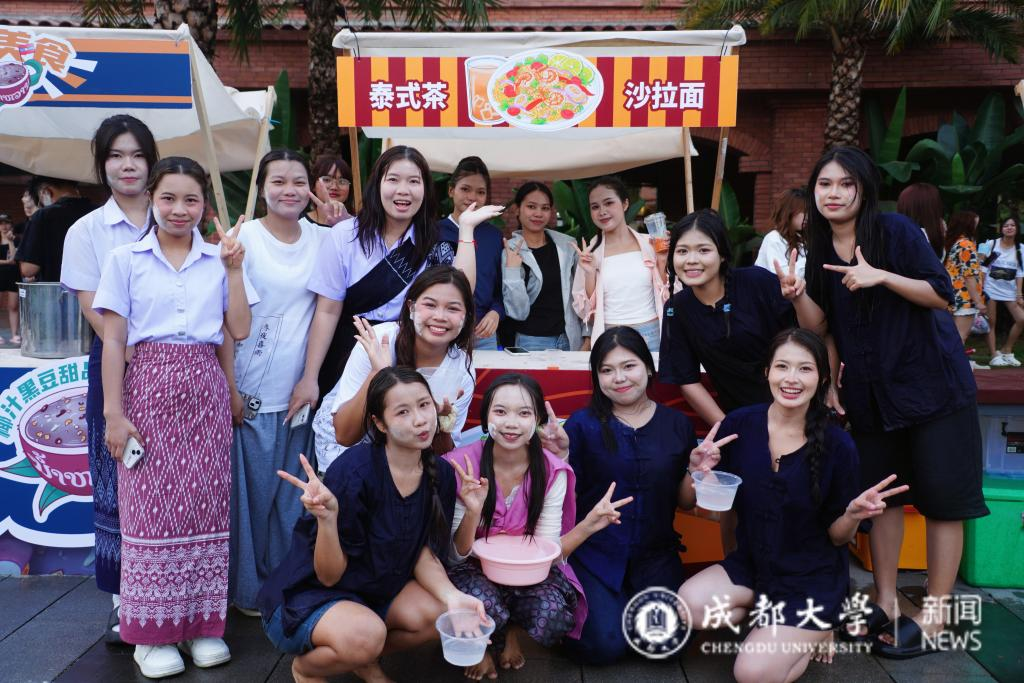
Nine cultural booths provided an immersive space for exchange, where the aromas of mango sticky rice, Thai milk tea, green papaya salad, and Lao desserts filled the air. In the corridor, a Thai traditional costume exhibition supported by the Royal Thai Consulate-General in Chengdu featured Chinese-Thai bilingual introductions, allowing teachers and students to experience the charm of intangible cultural heritage up close.
As a significant practice in Chengdu University's international education and urban international communication, the event focused on the theme of the 5th anniversary of the China-ASEAN Comprehensive Strategic Partnership, seamlessly blending traditional festival celebration, cultural mutual learning, and youth exchange.
In recent years, Chengdu University has steadfastly advanced its international education and forged partnerships with numerous universities and institutions worldwide. It continues to develop signature international cultural exchange brands, fostering a new generation of youth with a global perspective. Moving forward, Chengdu University will continue to establish high-level international exchange platforms. With culture as a medium and youth as a bridge, the university seeks to deepen people-to-people bonds and contribute its strength to Chengdu's development as an international center for foreign exchanges.
Guided by the Information Office of Chengdu Municipal People's Government, the event was jointly hosted by Chengdu University and Chengdu Radio and Television, and jointly undertaken by the Office of International Cooperation and Exchange, the International Department of the College of Chinese and ASEAN Arts, and the College of Foreign Languages and Cultures at Chengdu University. It received great support from the Chengdu Education Center for International Exchanges and the Sichuan Provincial Research Institute of Thai Studies, as well as the Royal Thai Consulate-General in Chengdu, Silpakorn University, the Chengdu Office of the Tourism Authority of Thailand, and several Thai enterprises in Chengdu.
Editor: Min Xiuling Executive Editor: Lyu Jia